


Introduction to Australian Skills Assessments
Securing a positive Skills Assessment represents the absolute first gateway to migrating to Australia under the General Skilled Migration (GSM) program. Whether you target the Skilled Independent Visa (Subclass 189), the State Nominated Visa (Subclass 190), or a regional pathway, you cannot lodge an Expression of Interest (EOI) without a formal positive assessment outcome.
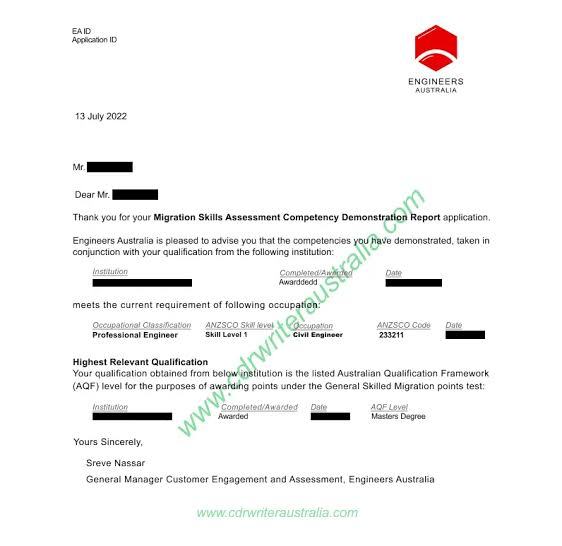
An assessing authority evaluates your educational qualifications and work history to verify that your skills match Australian professional standards. Because each occupation corresponds to a specific assessing body, understanding exact documentation rules ensures a smooth and successful evaluation.
Major Assessing Authorities in Australia
The Australian Department of Home Affairs delegates skill evaluations to independent professional bodies. Depending on your occupation, you will submit your file to one of several main authorities:
- Engineers Australia (EA): Assesses professional engineers, engineering technologists, and engineering associates.
- Australian Computer Society (ACS): Evaluates Information Technology (IT), software engineering, and cybersecurity professionals.
- VETASSESS: Handles the broadest range of general professional occupations, including managers, marketing specialists, and administrative executives.
- CPA Australia / CA ANZ / IPA: Evaluates accountants, auditors, and financial analysts.
- Trades Recognition Australia (TRA): Assesses skilled trade occupations such as electricians, plumbers, mechanics, and chefs.
Step-by-Step Process for a Successful Application
Preparing a flawless submission requires systematic research and careful document collection. Follow these five essential steps:
Step 1: Identify Your Exact ANZSCO Code
First, search the Australian and New Zealand Standard Classification of Occupations (ANZSCO) database. Every occupation carries a 6-digit ANZSCO code accompanied by a official task list. Consequently, you must ensure that your daily duties match at least 65% to 80% of the official ANZSCO task description for your chosen role.
Step 2: Review the Assessing Authority’s Guidelines
Second, visit the website of your designated assessing authority and download their current application guide. Assessing bodies frequently update their requirements regarding work experience duration, degree relevance, and document formatting. Therefore, reviewing official guidelines prevents costly submission errors.
Step 3: Gather Academic and Professional Records
Third, collect certified color copies of all relevant educational credentials. You must provide:
- Official degree certificates or trade diplomas.
- Complete academic transcripts listing course modules and grades.
- Professional registration certificates or membership cards (where applicable).
Step 4: Secure Detailed Employer Reference Letters
Fourth, obtain official reference letters from current and past employers. Assessing authorities reject generic reference letters that state only job titles and salary. To guarantee approval, your reference letter must include:
- Official company letterhead with complete contact details.
- Your exact job title and employment dates (start and end dates).
- Employment type (full-time or part-time) and weekly worked hours.
- A detailed breakdown of your daily duties and core responsibilities.
- The physical signature and contact details of your direct supervisor or HR manager.

Step 5: Provide Secondary Evidence of Paid Employment
Finally, assessing bodies require verifiable proof that your work was paid. Submitting primary reference letters without financial evidence often leads to refusal. Therefore, assemble secondary evidence such as:
- Official monthly payslips covering the start and end of each employment period.
- Income tax return statements or government tax assessments.
- Bank statements highlighting regular salary deposits from your employer.
Critical Requirements by Major Assessing Bodies
To help you prepare effectively, review this comparison of requirements across major Australian assessing authorities:
| Assessing Authority | Key Target Occupations | Standard Work Requirement | Typical Processing Time |
| Engineers Australia (EA) | Civil, Mechanical, Electrical Engineers | CDR report required for non-accredited degrees; 1–3 years work experience | 4 to 12 weeks |
| Australian Computer Society (ACS) | Software Engineers, Developers, ICT Analysts | 2 to 4 years post-qualification work experience (depends on degree relevance) | 6 to 10 weeks |
| VETASSESS | Project Managers, Marketers, Consultants | At least 1 year of highly relevant post-qualification work experience | 8 to 14 weeks |
| CPA / CA ANZ | Accountants, External Auditors | Relevant bachelor’s degree meeting mandatory accounting core subjects | 4 to 8 weeks |
Common Errors That Cause Assessment Refusals
Avoiding frequent mistakes speeds up processing and protects your investment.
Copying Duties Straight from ANZSCO
While your responsibilities must align with the ANZSCO description, copying text verbatim raises immediate plagiarism flags. Instead, rewrite your daily duties in your own words, reflecting your actual projects and workplace accomplishments.
Missing English Language Requirements
Certain authorities, such as Engineers Australia and accounting bodies, require an English language test result (IELTS, PTE, or TOEFL) upfront before processing your application. Always verify whether your assessing authority requires English scores prior to submission.
Uncertified non-English Document Translations
If any of your academic or work documents are written in a language other than English, you must provide a certified translation completed by an accredited translator (such as NAATI-certified translators in Australia or registered official translation agencies abroad).
Actionable Checklist for Submission Day
Before clicking submit on your assessing authority’s portal, run through this quick checklist:
- Format Check: Ensure all documents are clear, high-resolution color scans of original hardcopies.
- Consistency Check: Verify that employment dates match perfectly across your resume, reference letters, tax documents, and bank statements.
- Contact Details: Double-check that your supervisor’s phone number and professional email address are active, as assessors frequently conduct verification calls.
Strategic Next Steps and Resources on Detunity
Building a competitive profile for international opportunities involves combining strategic academic planning with professional documentation. Explore these key resources to strengthen your global journey:
- Flexible Academic Pathways: If you are planning an international study route before applying for skilled migration, check our complete guide on Australia Skilled Independent Visa (Subclass 189): Complete Step-by-Step Guide.
- Funding Your Overseas Education: Browse active global scholarship options in our updated directory of How to Study in Canada on a Fully Funded Scholarship Without IELTS
Elevate Your Global Application Strategy!
Are you aiming to study abroad on full scholarship before launching your global career? Download your copy of The Fully Funded Scholarship Blueprint Ebook. Discover proven email templates, winning statement strategies, and step-by-step guidance to secure full university funding!
Discover more from Detunity Scholarships
Subscribe to get the latest posts sent to your email.





Leave a comment